
Aesthetic Treatments
What Is Lymphatic Drainage? A Guide to Lymphatic Massage for Edema and Cellulite
What is lymphatic drainage, how is it done, how many sessions do you need and who should avoid it? The role of lymphatic massage in edema, bloating and the look of cellulite.
In this article
Lymphatic drainage is a gentle, rhythmic massage technique that speeds up the removal of excess fluid and waste products from the body through the lymphatic vessels. It is used as a supportive treatment for circulation-related complaints such as edema, a feeling of heaviness, swollen legs and the appearance of cellulite. It can be performed by hand (manual lymphatic drainage) or supported by devices that use vacuum and roller technology.
What does the lymphatic system do?
The lymphatic system is a drainage and defence network that works alongside the circulatory system. It collects the fluid, protein residues and metabolic waste that build up between cells, filters them through the lymph nodes and returns them to the bloodstream. It has no pump like the heart; its flow is driven by muscle movement, breathing and external pressure on the skin. A sedentary lifestyle, long hours of standing or sitting at work, high salt intake and hormonal changes all slow this flow down. When it slows, fluid accumulates between the tissues and shows up as edema, a feeling of heaviness and an uneven skin surface.
What is lymphatic drainage massage and how is it done?
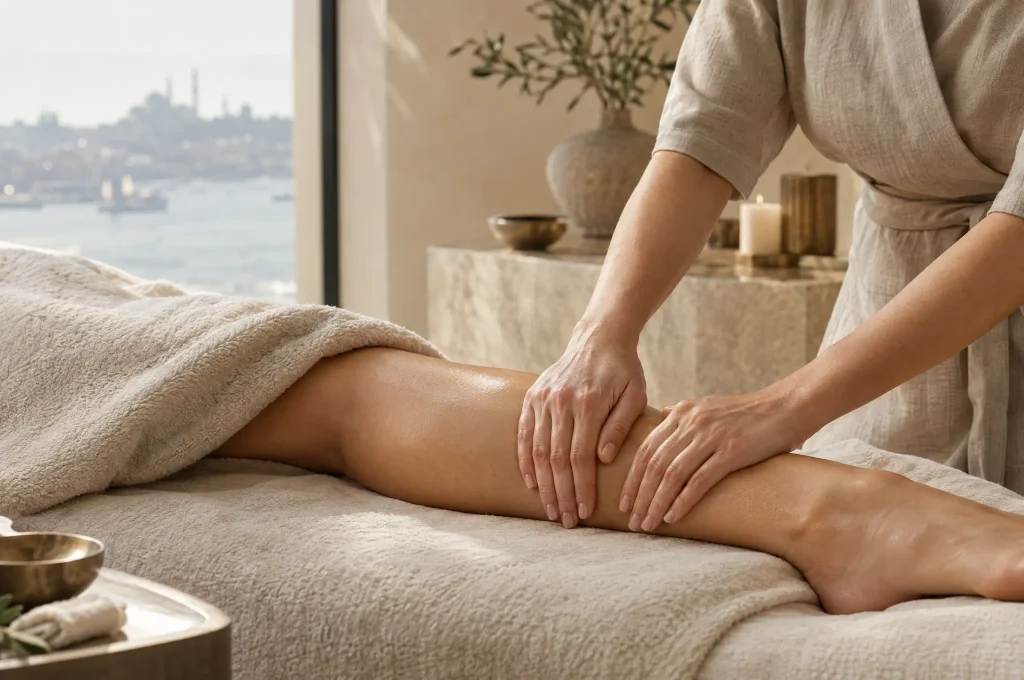
Its biggest difference from a classic massage is that the pressure is much lighter. Lymph capillaries sit in a superficial layer just beneath the skin, and firm pressure closes these channels instead of opening them. That is why the treatment consists of slow, rhythmic, one-directional movements that do not stretch the skin. A session usually begins by preparing the areas where lymph nodes are concentrated (the neck, armpits and groin); the therapist then works from the target area towards these drainage points. In other words, the flow is always directed towards the centre of the body.
A session lasts 30 to 60 minutes depending on the area. It is not painful; most people relax during the session and notice that they need to urinate more often afterwards. This is an expected response.
Main uses of lymphatic drainage
- Edema and swelling: especially the heaviness in the legs and ankles that builds up towards the end of the day.
- The appearance of cellulite: edema is not the only cause of cellulite, but fluid retention makes the orange-peel look more visible. By reducing this component, drainage supports the effect of other cellulite treatment methods.
- Care after aesthetic procedures: where your doctor considers it appropriate, it can help post-procedure swelling resolve faster.
- Menstrual and hormonal edema: it can ease bloating caused by cyclical water retention.
- General relaxation: because it supports the parasympathetic nervous system, some people report better sleep quality.
It should be stated clearly that lymphatic drainage is not a weight-loss method. The change on the scale is excess fluid leaving the body, not fat loss. Lasting results require a healthy diet and regular physical activity.
Manual or device-assisted lymphatic drainage?
Manual lymphatic drainage is the classic method: a trained therapist works by hand and adjusts the pressure to the person in real time. In device-assisted drainage, vacuum and roller heads lift and roll the tissue under the skin in a controlled way, stimulating both lymph flow and microcirculation. The advantage of devices is that the pressure is the same, and measurable, in every session.
At our clinic we use the Cellu M6 Infinity endermology device and Icoone Laser Med for this purpose. Which method suits you depends on the cause of the edema, your skin thickness and any accompanying health conditions.
How many sessions are needed?
A feeling of lightness can appear even after a single session, but for a visible and lasting change a programme of 8–12 sessions in total is usually planned, starting with 2 sessions a week. As the complaint eases, the sessions are spaced further apart and followed by monthly maintenance sessions. Your personal plan is finalised after the initial assessment.
Who is it not suitable for?
Lymphatic drainage is a safe treatment, but it is not suitable in every situation. In the following cases a doctor’s assessment is essential before treatment:
- Untreated or active infection, or an illness with fever
- Conditions that affect fluid balance, such as heart failure and kidney failure
- Suspected or previous deep vein thrombosis
- Ongoing active cancer treatment
- Open wounds, eczema or skin infection in the treatment area
- Pregnancy (the technique and area depend on your doctor’s approval)
If the swelling is on one side only, started suddenly, or the leg is red and warm, see a doctor before having a massage. This can signal a circulatory emergency.
What should you pay attention to after a session?
To maintain the effect, drink more water in the hours after the session. On the same day, avoid very salty food, long periods of inactivity, very hot showers and the sauna. Regular walking, resting with your legs raised above heart level and, when needed, wearing compression stockings help preserve the gains between sessions.
Frequently asked questions
Does lymphatic drainage help you lose weight?
No. Lymphatic drainage does not reduce fat tissue; it helps the body eliminate excess fluid. The drop on the scale and the smaller measurements after a session come from the edema resolving. Lasting weight loss requires a proper diet and exercise routine.
Does lymphatic drainage massage hurt?
No. Because the lymph channels lie just beneath the skin, the treatment is applied with light pressure. A hard, painful massage does not increase lymph flow and can actually hinder it.
Is it normal to urinate frequently after lymphatic drainage?
Yes. Fluid that had built up between the tissues re-enters the circulation and is excreted through the kidneys, so needing to urinate more for a few hours after the session is an expected response.
How often can you have lymphatic drainage?
A programme usually starts with 2 sessions a week and runs for 8–12 sessions in total. As the complaints ease, the sessions are spaced further apart and followed by monthly maintenance sessions.
Does lymphatic drainage get rid of cellulite?
Lymphatic drainage alone does not eliminate cellulite completely. By reducing edema it softens the orange-peel look and supports the effect of other cellulite treatments. The best results come from combined protocols.
Can lymphatic drainage be done during pregnancy?
In some cases it can be used for leg swelling during pregnancy, but the area and technique must be decided with the approval of the doctor following the pregnancy. Treatment without a doctor’s approval is not recommended.
This content is for information only and does not replace a medical examination. To find the right protocol for you, get in touch with us.
The content on this website is prepared by Sculpture. It is for information only. For diagnosis and treatment, always consult your physician.
Health Guide

Hand Rejuvenation: Hand Filler and Age Spot Treatment
What is hand rejuvenation and how can prominent veins on the back of the hand be concealed? Treatments for volume loss, thinning…

How to Get Rid of Neck Wrinkles: Causes and Treatments
Why do neck wrinkles form and how can they be treated? Botox, Profhilo and collagen-stimulating treatments for Venus rings, platysmal bands and…

What Is Alopecia Areata? Symptoms and Treatment
What is alopecia areata, what causes it and does it go away? Symptoms, diagnosis, medical treatment options and the limits of supportive…