
Healthy Living & Nutrition
Healthy Eating
What is healthy eating, how do you build a balanced plate and why do crash diets backfire? Practical tips and warning signs for lasting habits.
In this article
- What is healthy eating and why does it matter so much?
- What should a healthy plate look like?
- Why do crash diets do more harm than good?
- How important are regular meals and breakfast?
- How can you keep eating healthily in everyday life?
- How does healthy eating support weight management and body contouring?
- Who should not diet on their own, and when should you see a doctor?
- Frequently asked questions
Healthy eating means getting the energy your body needs, along with protein, carbohydrates, fat, vitamins, minerals and water, from a varied, balanced and sustainable diet. What matters is not individual “miracle” foods but the overall balance of your plate. Whether you want to lose weight, gain weight or maintain it, the basics are the same: eat enough, eat a variety of foods, match portions to your needs and keep it up for the long term.
What is healthy eating and why does it matter so much?
Healthy eating means getting the nutrients your body needs for its daily functions in the right amounts and from the right sources. Neither too little nor too much: eating far below your energy needs and constantly eating more than you need both take a toll on your health over time.
The effects of a balanced diet go beyond your weight. In the long run, it helps lower the risk of chronic conditions such as cardiovascular disease, type 2 diabetes and some cancers. Day to day, you feel it as steadier energy, more comfortable digestion and more stable blood sugar. Skin, hair and nail health also depend directly on getting enough protein, vitamins and minerals.
What should a healthy plate look like?
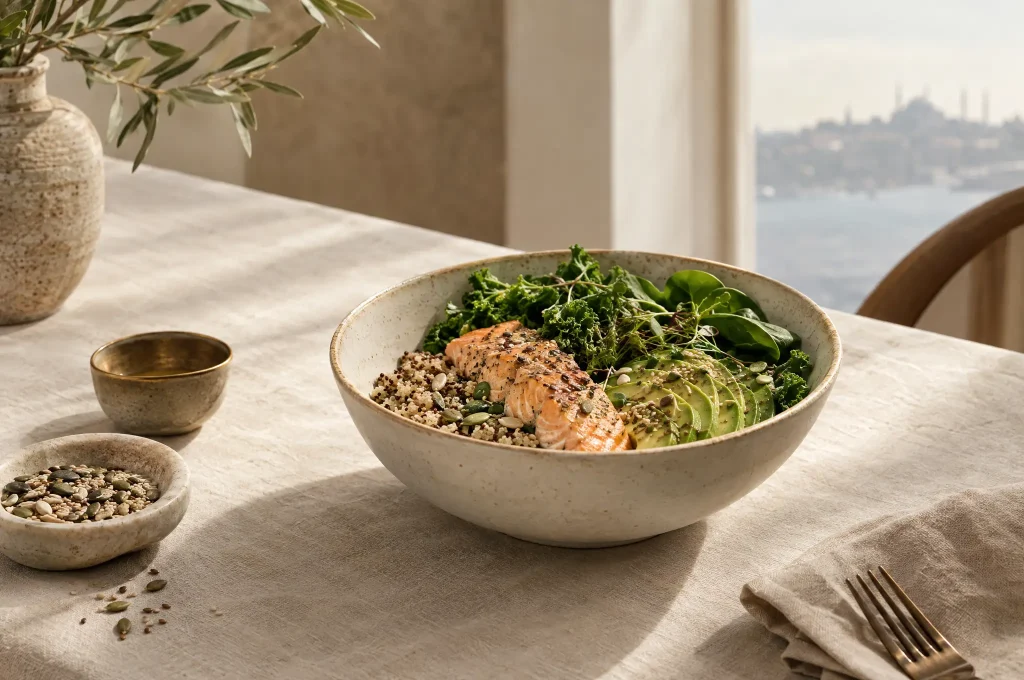
As a practical rule, fill half your plate with vegetables and fruit, a quarter with protein and a quarter with whole grains. This “plate model” is one of the easiest ways to strike a balance without counting calories.
- Vegetables and fruit: Colorful vegetables, ideally in season, at every meal and a few portions of fruit a day; they provide fiber, vitamins and minerals.
- Protein: Eggs, fish, chicken, red meat, yogurt, cheese, and legumes such as lentils, chickpeas and white beans. Protein keeps you full and helps preserve muscle mass.
- Whole grains: Bulgur, oats, whole-wheat bread and buckwheat keep you full for longer than white flour.
- Healthy fats: Olive oil, walnuts, hazelnuts, almonds and avocado support heart health when eaten in moderation.
- Water: Water should be your main drink; keep sugary drinks and packaged fruit juices to a minimum.
Turkish cuisine has an advantage here: vegetable dishes cooked in olive oil, legume stews, bulgur pilaf and yogurt are ready-made examples of a balanced plate. Fried foods, pastries, processed meats and desserts are not forbidden, but they should be occasional choices rather than part of your daily routine.
Why do crash diets do more harm than good?
Crash diets may bring a quick drop on the scale, but much of that loss is water and muscle, not fat. Very low-calorie, monotonous eating cannot cover the nutrients your body needs.
- Vitamin and mineral deficiencies: As variety shrinks, deficiencies in micronutrients such as iron, B12 and calcium can develop, bringing fatigue, hair loss and difficulty concentrating.
- Muscle loss and metabolic adaptation: The body adapts to long, severe restriction by spending less energy. As muscle mass falls, your daily energy needs drop too.
- Overall health: When energy and protein intake stay too low for too long, your body’s resilience can suffer. Very rapid weight loss can also raise the risk of gallstones in some people.
- Weight regain: Once rules you cannot sustain are dropped, old habits return and the lost weight often comes back.
So the goal is not a few weeks of harsh restriction but a balanced routine you can keep up for years.
How important are regular meals and breakfast?
A regular meal pattern makes it easier for many people to manage hunger and unplanned snacking. Skipping meals, on the other hand, often leads to intense hunger later in the day and to eating more than you need.
There is no one-size-fits-all rule for how many meals to eat: some people feel best with three main meals, others with two main meals and a snack. What matters is that your overall diet is balanced and your meals are spread evenly through the day.
The same goes for breakfast. The evidence that breakfast on its own helps with weight loss is not clear-cut; however, a breakfast with protein and fiber, such as eggs, cheese, tomatoes, cucumber, olives and whole-grain bread, keeps many people full until lunch and helps them start the day with more energy. If you are not hungry in the morning, there is no need to force yourself; simply make your first meal of the day a balanced one.
How can you keep eating healthily in everyday life?
The secret to sustainability is small but lasting habits rather than big, sudden changes.
- Plan your weekly shopping and meals, and keep healthy options at home.
- Read the labels on packaged foods and watch the amount of added sugar and salt. The World Health Organization recommends less than 5 grams of salt a day for adults.
- Eat slowly and avoid eating in front of a screen; the feeling of fullness reaches the brain with a delay.
- Drink enough water throughout the day; thirst is sometimes mistaken for hunger.
- When eating out, choose grilled, boiled or baked dishes with a side salad.
- Give yourself some flexibility: a dessert on a special occasion does not mean your routine has fallen apart.
Sleep and stress also affect your eating directly. Too little sleep can disrupt the hormones that regulate appetite and increase cravings for sweet and fatty foods. That makes regular sleep an invisible but important part of healthy eating.
How does healthy eating support weight management and body contouring?
Losing weight, gaining weight and maintaining your current weight all come down to the balance between the energy you take in and the energy you use. Healthy eating lets you strike that balance without going hungry or running short of nutrients.
When losing weight, getting enough protein and doing regular strength training help make sure the loss comes mostly from fat and that muscle mass is preserved. If you want to gain weight, the goal is to do so healthily, with nutrient-rich choices rather than empty calories. If you are curious about your own healthy weight range, see our article on ideal and healthy weight.
Body contouring treatments such as regional slimming can help with stubborn areas, but they do not replace regular exercise and healthy eating, and keeping the results depends largely on your daily habits. At our clinic in Etiler, our dietitian Berna Melis Hepgüler prepares a personal nutrition plan based on your lifestyle, health and goals, and follows your progress with you.
Who should not diet on their own, and when should you see a doctor?
In some situations, changes to your diet should always be made under the supervision of a doctor or dietitian:
- Pregnancy and breastfeeding
- Chronic conditions such as diabetes or kidney, liver, heart or thyroid disease
- Regular medication use (e.g. blood thinners or diabetes medication); some foods and supplements can interact with medicines
- A past or current eating disorder
- Children, teenagers and older adults
See a doctor if you have unexplained weight loss, persistent fatigue, noticeable hair loss, pallor, palpitations, ongoing digestive complaints or intense anxiety around food. Blood tests can reveal conditions such as iron deficiency or low B12 or vitamin D levels; supplements should only be used after this assessment and on a doctor’s advice.
Frequently asked questions
Do I have to count calories to eat healthily?
No. The plate model, portion awareness and regular meals are a good enough start for most people. If you have a specific weight goal, keeping a food diary for a while can raise awareness; it is best to plan this with a dietitian.
How many meals a day should I eat?
There is no single number that suits everyone. Some people feel better with three main meals, others with two main meals and a snack. What matters is eating regularly and not going hungry for long stretches and then overeating.
Do I need to cut out carbohydrates completely?
Usually not. Whole grains, legumes, vegetables and fruit are valuable carbohydrate sources, rich in fiber and vitamins. The group to limit is added sugar and products made from white flour.
Should I take vitamin supplements?
A healthy adult who eats a balanced diet can meet most of their needs from food. The need for supplements should be determined by blood tests and a doctor’s assessment; unnecessary or high-dose supplements can do harm.
When will I notice the effects of healthy eating?
Many people feel positive changes in energy, digestion and sleep within a few weeks. Changes in weight and blood values take longer and vary from person to person. The real gain is making these habits a permanent part of your life.
This content is for information only and does not replace a medical examination. For a personalized nutrition plan, please get in touch with us.
The content on this website is prepared by Sculpture. It is for information only. For diagnosis and treatment, always consult your physician.
Health Guide

Longevity: A New Definition of a Long, Quality Life with Sculpture
Longevity means living longer and healthier. How nutrition, exercise, sleep, stress management and regular check-ups help you add more healthy years.

What Is Irritable Bowel Syndrome (IBS)?
What is irritable bowel syndrome (IBS)? Symptoms, trigger foods, the low FODMAP diet and the warning signs that mean you should see…

How to Prevent Weight Regain After Bariatric Surgery
Bariatric surgery is a starting point. Learn why weight regain happens, which eating and exercise habits help and which warning signs to…