
Healthy Living & Nutrition
Is a Gluten-Free Diet Healthy?
A gluten-free diet is essential for celiac disease and wheat allergy but adds no benefit for healthy people. Here is why testing must come first.
In this article
- What is gluten and which foods contain it?
- Who needs to eat gluten-free?
- Why should you get tested before going gluten-free?
- Why does a gluten-free diet make you lose weight?
- What are the risks of going gluten-free when you don’t need to?
- What can you eat on a gluten-free diet?
- When should you see a doctor?
- Frequently asked questions
A gluten-free diet is necessary and healthy for people with celiac disease, a wheat allergy or a gluten sensitivity assessed by a doctor. For a healthy person, however, it brings no extra benefit on its own, and if it is poorly planned it can leave you short of fiber, B vitamins and iron. The most important rule: if celiac disease is suspected, get tested before you cut out gluten.
In recent years, gluten-free diets have been marketed as a shortcut to weight loss and “clean eating”. Gluten-free aisles in supermarkets have grown, and many people cut gluten out of their lives without having any health problem. But if you don’t have celiac disease, is going gluten-free really necessary? In this article we explain who truly needs it, when it is an unnecessary restriction, and the one step you should never skip before starting.
What is gluten and which foods contain it?
Gluten is a group of proteins found mainly in wheat, as well as in barley and rye, that gives dough its elasticity. Most flour-based foods contain it, including bread, pasta, bulgur, semolina, couscous, filo pastry, savory pastries such as börek, cakes and cookies. Beer brewed from barley malt and other malt-containing products also belong to this group.
Oats, on the other hand, are naturally gluten-free, but they are often processed in the same facilities as wheat and can become contaminated. Gluten can also hide in unexpected places such as ready-made soups, sauces, soy sauce, some processed meats and spice blends.
Who needs to eat gluten-free?
For certain diagnosed conditions, a gluten-free diet is the treatment itself:
- Celiac disease: Gluten triggers immune-mediated damage to the small intestine. The only known treatment is a strict gluten-free diet for life; even small amounts can harm the gut.
- Wheat allergy: An allergic reaction to wheat proteins. Removing wheat is usually enough; an allergist decides whether other grains also need to be avoided.
- Non-celiac gluten sensitivity: Considered in people who get bloating, abdominal pain or fatigue from gluten-containing foods once celiac disease and allergy have been ruled out.
Celiac disease has no single “typical” presentation. Besides diarrhea, bloating and weight loss, it can show up as unexplained iron-deficiency anemia, constant tiredness, mouth ulcers, osteoporosis, poor growth in children or an itchy, blistering rash. Some people have no symptoms at all.
Why should you get tested before going gluten-free?
Because celiac tests are only reliable while gluten is still in your diet. Diagnosis starts with a blood test for celiac-specific antibodies; if needed, a gastroenterologist takes a biopsy from the small intestine during an endoscopy. If you stop eating gluten on your own, antibody levels can fall, the intestinal lining can start to heal and the tests may come back falsely “normal”.
That creates two risks: either genuine celiac disease is missed, so problems such as anemia and bone loss are not monitored, or you commit to a restrictive diet for life without needing to. If you have already stopped, you may need to eat gluten again before testing; your doctor should decide for how long and in what amount.
In short: diagnosis first, diet second. People with a family history of celiac disease, type 1 diabetes or autoimmune thyroid disease should be particularly careful.
Why does a gluten-free diet make you lose weight?
Weight loss on a gluten-free diet happens because calorie intake drops, not because gluten has been removed. Most gluten-containing breads, pastries, cakes, cookies and packaged snacks are high in energy and relatively low in nutrients. When you swap them for vegetables, legumes and protein foods, you naturally take in fewer calories.
In other words, the difference comes from replacing unhealthy choices with better ones, not from gluten itself. You can get the same result without banning gluten, through a balanced, portion-controlled diet.
What are the risks of going gluten-free when you don’t need to?
Cutting out gluten completely without a medical reason can lower the quality of your diet if it isn’t planned:
- Too little fiber: Whole wheat, rye and barley are important sources of fiber. Eating less fiber can cause constipation and may reduce the diversity of your gut bacteria.
- Vitamin and mineral shortfalls: An unplanned gluten-free diet can be low in iron, folate, B vitamins, magnesium, zinc and selenium.
- Processed gluten-free products: To get the texture right without gluten, manufacturers may add more sugar, fat and salt. The gluten-free version of a product is often higher in calories, lower in fiber and more expensive.
- A masked diagnosis: Genuine celiac disease can go unnoticed.
So for a healthy adult, the advice is not to ban gluten but to cut down on refined flour products and build a healthy eating pattern based on whole grains, vegetables and legumes.
What can you eat on a gluten-free diet?
Plenty of foods are naturally gluten-free, and a well-planned gluten-free diet can be very varied. Focus on foods that are gluten-free in their natural state rather than on packaged “gluten-free” products:
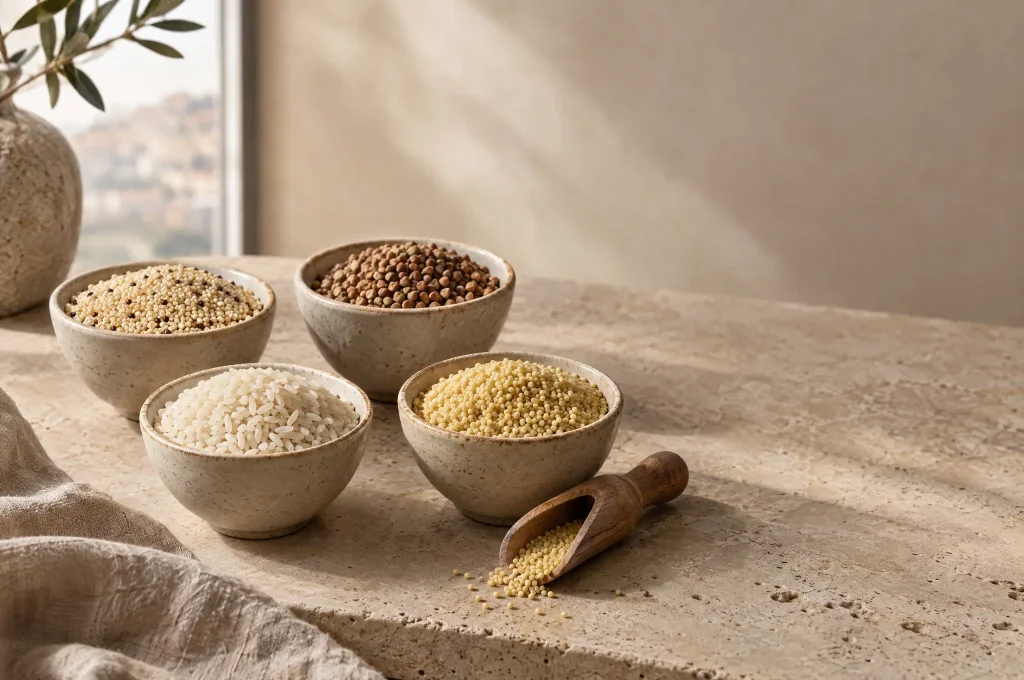
- Buckwheat, corn, rice, amaranth, quinoa and millet
- Potatoes, sweet potatoes and chestnuts
- Legumes such as chickpeas, lentils, beans and soy
- All vegetables and fruit
- Unprocessed nuts such as hazelnuts, almonds and walnuts, plus seeds
- Eggs, chicken, fish and meat (plain, without sauces or fillers)
- Milk, yogurt, ayran and cheese
- Olive oil, butter, avocado and olives
For people with celiac disease, cross-contamination in the kitchen also matters: a shared toaster, the same frying oil or flour-dusted worktops can all carry gluten. Read the ingredients list on packaged foods and choose products labeled “gluten-free” or carrying the crossed-grain symbol. Remember that tarhana, bulgur, semolina and couscous all contain wheat.
At our clinic in Etiler, our dietitian Berna Melis Hepgüler can draw up a sustainable eating plan for people who need to avoid gluten, one that prevents nutrient gaps and fits around social life.
When should you see a doctor?
See a doctor first, rather than cutting out gluten on your own, if you have:
- Diarrhea, bloating, abdominal pain or unexplained weight loss lasting for weeks
- Anemia that does not improve with treatment, or constant fatigue
- Recurring mouth ulcers, an itchy blistering rash or osteoporosis at a young age
- A first-degree relative with celiac disease
- A child with poor growth or delayed development
- Blood in the stool, abdominal pain that wakes you at night, or vomiting
Gluten is not the only cause of digestive complaints; irritable bowel syndrome, lactose intolerance and other bowel conditions can cause similar symptoms. If you also have anemia, it is worth reviewing nutrition for iron deficiency with your doctor.
Frequently asked questions
Do I need to go gluten-free if I don’t have celiac disease?
No. Unless you have celiac disease, a wheat allergy or a gluten sensitivity assessed by a doctor, there is no proven benefit to cutting out gluten. For most people, a balanced diet that limits refined flour products and focuses on whole grains, vegetables and legumes is the better approach.
I’ve already stopped eating gluten. Can I still get tested for celiac disease?
You can, but the result may be misleadingly normal, because the tests are reliable only while gluten is in your diet. Your doctor may advise you to reintroduce gluten in a controlled way before testing. Don’t plan this on your own.
Are oats gluten-free?
Oats are naturally gluten-free, but they are frequently contaminated with wheat during processing. People with celiac disease should choose only oats labeled “gluten-free”, and because a small number of patients also react to oats, they should try them with guidance from a doctor or dietitian.
Are gluten-free products healthier than regular ones?
Not always. Packaged gluten-free breads, cakes and cookies may contain more sugar, fat and salt to achieve the right texture, and they are usually lower in fiber. Reading labels and focusing on naturally gluten-free foods is the better choice.
Is gluten sensitivity the same as celiac disease?
No. Celiac disease is an autoimmune condition that damages the small intestine and requires a strict gluten-free diet for life. In non-celiac gluten sensitivity this damage does not occur; it is diagnosed only after celiac disease and wheat allergy have been ruled out, and how strict the diet needs to be is decided individually.
This content is for information only and does not replace a medical examination. For a nutrition plan that suits you or an appointment with our dietitian, please get in touch with us.
The content on this website is prepared by Sculpture. It is for information only. For diagnosis and treatment, always consult your physician.
Health Guide

Longevity: A New Definition of a Long, Quality Life with Sculpture
Longevity means living longer and healthier. How nutrition, exercise, sleep, stress management and regular check-ups help you add more healthy years.

What Is Irritable Bowel Syndrome (IBS)?
What is irritable bowel syndrome (IBS)? Symptoms, trigger foods, the low FODMAP diet and the warning signs that mean you should see…

How to Prevent Weight Regain After Bariatric Surgery
Bariatric surgery is a starting point. Learn why weight regain happens, which eating and exercise habits help and which warning signs to…